Views: 0 Author: Site Editor Publish Time: 2026-03-20 Origin: Site
The primary difference between a slider bed and a roller bed lies in the surface contact and friction levels: a slider bed utilizes a smooth solid surface (often steel or wood) to support the belt, making it ideal for impact zones and small items, while a roller bed uses a series of rotating rollers to significantly reduce friction, which is better suited for heavy loads and long distance transportation.
In the following sections, we will delve into the technical specifications, load capacities, and maintenance requirements of each system. We will also explore how these components integrate into complex systems like a curved belt conveyor and discuss the environmental suitability of these industrial solutions. By the end of this guide, you will have a clear framework for selecting the conveyor bed that aligns with your operational goals and budget.
Understanding the Fundamentals of Slider Bed Conveyors
Exploring the Mechanics of Roller Bed Conveyors
Comparative Analysis of Load Capacity and Friction
Strategic Integration within a Curved Belt Conveyor System
Maintenance Protocols and Long Term Durability
Application Environments for Industrial Material Handling
Final Decision Matrix for Belt Support Systems
A slider bed conveyor is a type of belt conveyor where the belt slides over a stationary flat surface, typically made of sheet metal or high density plastic, providing continuous support across the entire width and length of the belt.
This design is favored for its simplicity and the stability it offers to the products being moved. Because the support is a solid plate, there are no gaps between rollers where small items might get caught or where thin belts might sag. This makes the slider bed an excellent choice for inspection lines, sorting operations, and packaging stations where a steady, flat surface is paramount for manual intervention or automated scanning.
Furthermore, slider beds are exceptionally effective in "impact zones" where heavy items are dropped onto the belt. In a roller bed system, a heavy drop can damage individual rollers or their bearings; however, a reinforced slider bed plate can absorb the energy of the impact across a wider surface area. This structural integrity reduces the risk of mechanical failure during the loading process of bulky industrial materials.
From a manufacturing perspective, slider beds are generally more cost effective to produce and install initially. They have fewer moving parts than roller beds, which translates to a lower initial capital expenditure. In sectors like the curved belt conveyor industry, the slider bed concept is often modified to ensure the belt remains flat as it navigates the radial forces of a turn, ensuring the product remains centered without the complexity of tapered rollers in every section.
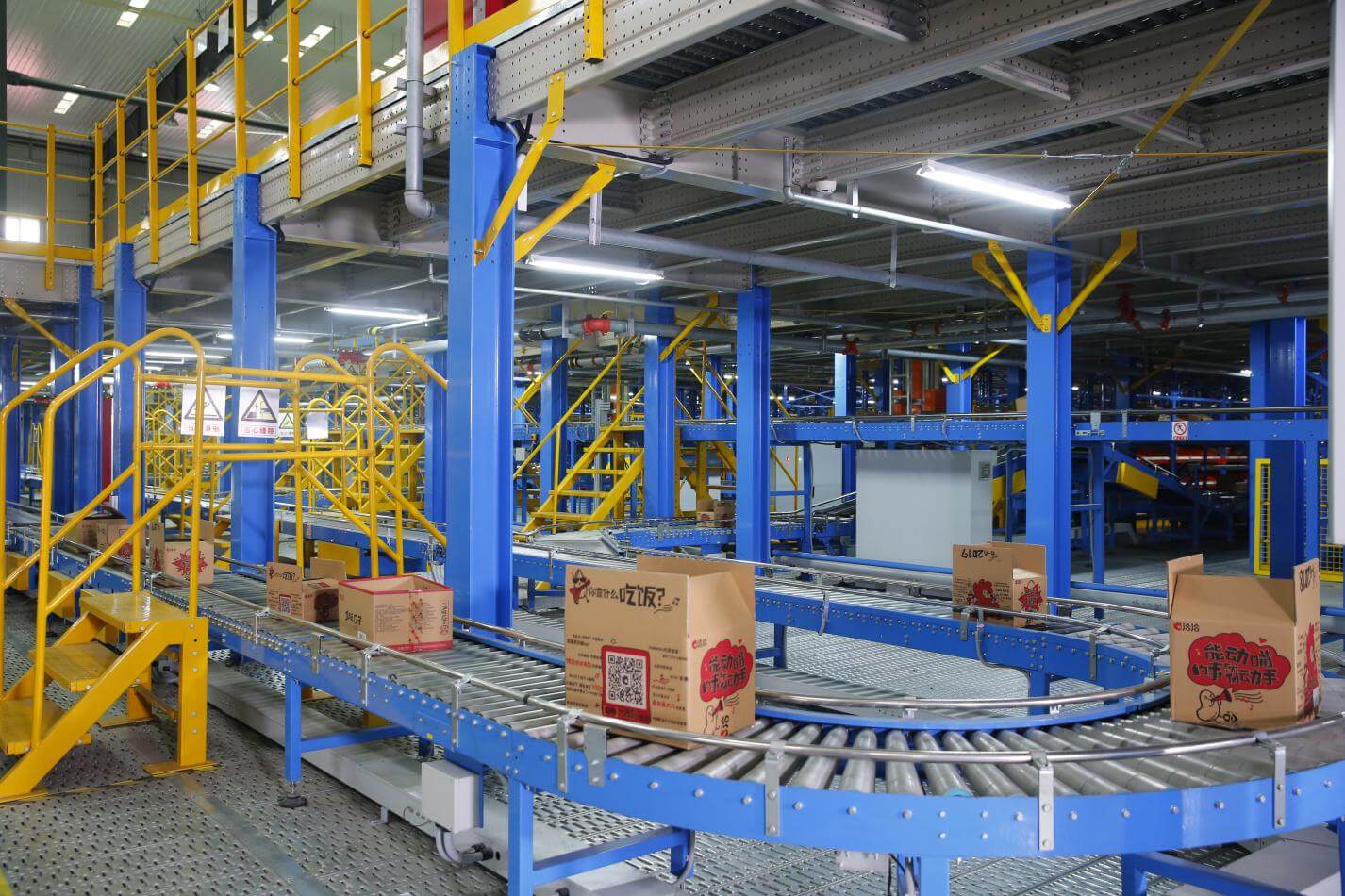
A roller bed conveyor supports the belt using a series of closely spaced rollers mounted in a frame, which transforms sliding friction into rolling friction to drastically reduce the energy required to move the belt.
The mechanical advantage of a roller bed is most evident when handling heavy loads over long distances. By minimizing the contact area between the belt and the support structure, the motor does not have to work as hard to overcome the "drag" that is inherent in slider bed designs. This reduction in friction leads to lower heat generation, which extends the life of the conveyor belt and reduces the frequency of belt replacements in high volume facilities.
In a curved belt conveyor, the roller bed configuration is often more complex, utilizing tapered rollers to match the varying speeds of the belt across its width. This prevents the belt from bunching or stretching unevenly during the curve. The rollers act as individual support points that allow for a more fluid movement of the belt, especially when the system must operate at high speeds or carry weights exceeding several hundred pounds per linear foot.
The modularity of roller beds also allows for easier customization. If a specific section of the conveyor needs higher weight capacity, rollers can be spaced more closely (on smaller "centers"). This flexibility is vital for B2B enterprises that anticipate future changes in their production lines. While the initial investment is higher due to the number of bearings and precision machined rollers required, the long term energy savings and higher weight limits often justify the cost.
When comparing load capacity and friction, roller beds are superior for heavy duty applications due to their low friction coefficient, while slider beds are better suited for light to medium loads where stability and cost are the primary concerns.
The relationship between friction and load is linear in conveyor systems. As the weight on the belt increases, the friction on a slider bed increases proportionally, requiring a much larger motor and consuming more electricity. Conversely, the rolling resistance of a roller bed remains relatively low even as the load increases. This makes roller beds the industry standard for transporting heavy pallets, large machinery parts, and bulk industrial raw materials.
| Feature | Slider Bed | Roller Bed |
| Friction Level | High (Sliding) | Low (Rolling) |
| Load Capacity | Light to Medium | Heavy to Extra Heavy |
| Belt Wear | Higher due to abrasion | Lower due to rolling contact |
| Initial Cost | Lower | Higher |
| Noise Level | Quiet | Moderate (Bearing noise) |
In the context of a curved belt conveyor, the friction management becomes even more critical. A curve naturally introduces lateral forces that want to push the belt toward the inner or outer radius. Using a slider bed in a curve requires high quality, low friction materials like UHMW plastic to prevent the motor from stalling. A roller bed curve, while more expensive, handles these lateral forces with greater efficiency, making it the preferred choice for high speed distribution centers.
Integrating support beds into a curved belt conveyor requires specialized engineering to ensure the belt stays tracked and tensioned while navigating the change in direction without excessive wear.
The curved belt conveyor is a masterpiece of material handling engineering. Unlike straight sections, a curve must manage the fact that the outer edge of the belt travels a longer distance than the inner edge. If a slider bed is used in a curve, the surface must be precisely machined to a radius that complements the belt's natural path. This prevents the belt from "climbing" the side rails or folding over itself, which are common issues in poorly designed curved systems.
Roller beds in a curved belt conveyor typically use tapered rollers. These rollers have a larger diameter at the outer edge and a smaller diameter at the inner edge. This ensures that the surface speed of the roller matches the speed of the belt at every point across the radius. This synchronization is crucial for preventing "scrubbing," where the belt rubs against a stationary or mismatched roller surface, leading to premature belt failure and increased energy consumption.
Choosing between the two for a curved section often depends on the product footprint. If the products are small or have irregular bottoms (like mesh bags or small components), a slider bed curve provides a snag free surface. For boxed goods or heavy containers, a roller bed curve offers the most efficient power transmission. Modern B2B systems often use a hybrid approach, employing slider beds for impact and sorting zones, and transitioning to roller beds for long straightaways and heavy curves.
Maintenance requirements differ significantly: slider beds require periodic inspection of the slider plate for wear and debris, whereas roller beds require scheduled lubrication and monitoring of individual roller bearings.
Durability in a slider bed is defined by the quality of the sliding surface. Over time, the friction between the belt and the plate can wear down the metal or plastic, creating "troughs" that affect belt tracking. However, because there are no moving parts in the support bed itself, there is very little that can "break." Maintenance is usually limited to cleaning the bed to remove dust and grit that could act as an abrasive against the belt.
Roller beds, while durable, are more complex. Each roller contains two bearings, and in a long system, there could be thousands of bearings that eventually require attention. If a single roller seizes up, it becomes a stationary "dead" spot that creates massive friction and can melt a hole through the conveyor belt. Therefore, a proactive maintenance schedule involving thermal imaging or acoustic monitoring is often used to identify failing bearings before they cause a system shutdown.
In high performance curved belt conveyor applications, maintenance accessibility is a key design factor. Slider beds are easier to wipe down and inspect visually. Roller beds may require more intensive labor to replace individual components in tight curves. For businesses focusing on "uptime," the simplicity of a slider bed is attractive, but for those focusing on "energy efficiency," the slightly higher maintenance of a roller bed is a necessary trade off for the reduced electrical load.
The choice of conveyor bed is also influenced by the environmental conditions of the facility, ranging from clean room environments to heavy industrial plants where durability is the highest priority.
It is important to note that while these conveyors are robust, they are designed for specific industrial and commercial settings. For instance, in facilities that prioritize acoustics and foot comfort, such as large scale libraries, professional meeting rooms, or healthcare corridors, the vibration and noise levels of the conveyor system must be minimized. Slider beds are naturally quieter than roller beds because they lack the "clack-clack" sound of rollers spinning at high RPMs.
Our equipment is ideally suited for environments such as:
Gymnasiums and Dance Studios: Where low noise and smooth operation are required for surrounding activities.
Hospitals and Kindergartens: Where safety and quiet transport of supplies are essential.
Libraries and Conference Centers: Where the integration of silent material handling helps maintain a professional atmosphere.
Please note that these industrial conveyor solutions are not intended for use in residential kitchens, bathrooms, or basements. We also ensure that our designs avoid any association with damp or poorly ventilated spaces, focusing instead on high traffic, clean, and well maintained professional environments. Whether it is a curved belt conveyor moving books in a municipal library or a system transporting medical supplies in a hospital, the focus remains on high quality foot feel for operators and superior sound absorption for the facility.
The final decision between a slider bed and a roller bed should be based on a balanced evaluation of load weight, belt speed, energy costs, and the specific geometry of your conveyor layout.
To maximize your ROI, consider the total cost of ownership rather than just the initial purchase price. A slider bed may save money today, but if you are running a high speed curved belt conveyor 24/7, the electricity costs and belt replacement expenses will quickly surpass the cost of a roller bed system. Conversely, for a low speed assembly line where precision and a flat working surface are needed, the roller bed's complexity would be an unnecessary burden.
| Criterion | Choose Slider Bed If... | Choose Roller Bed If... |
| Product Size | Small, fragile, or irregular | Large, heavy, or uniform |
| System Length | Short to medium runs | Long distance transport |
| Incline/Decline | High friction is needed for grip | Low friction is needed for power |
| Energy Goals | Lower priority than initial cost | High priority for long term savings |
| Complexity | Simple straight or wide curves | Complex curved belt conveyor paths |
In conclusion, both slider beds and roller beds have their place in a modern B2B material handling strategy. By analyzing your specific product needs and environmental constraints, you can select a system that ensures the smooth flow of goods. Whether you require the rugged simplicity of a slider bed or the high efficiency of a roller bed curve, selecting the right support structure is the first step toward an optimized, cost effective, and reliable conveyor system.


