Views: 0 Author: Site Editor Publish Time: 2025-11-05 Origin: Site
Are you optimizing your warehouse space and improving efficiency? Incline belt conveyors are a key solution for transporting materials vertically, helping save valuable floor space in manufacturing plants, warehouses, and distribution centers. By leveraging these systems, businesses can streamline operations while maximizing available space.
In this article, we will explore the essential design considerations for incline belt conveyors, including space constraints, angle of inclination, and material handling. Understanding these factors will help companies make informed decisions, optimizing conveyor systems for maximum efficiency and long-term performance.
Incline belt conveyors consist of several essential components that allow them to function effectively. These components work together to transport materials smoothly, safely, and efficiently.
● Belt: The primary surface that moves materials. It is typically made of rubber, PVC, or other durable materials, depending on the type of goods being transported. The belt plays a critical role in ensuring that materials stay securely in place during transport, particularly when dealing with inclined surfaces.
● Pulleys: These guide and support the conveyor belt, enabling it to move smoothly along its path. Pulleys also help maintain the tension of the belt, which is essential for stable and efficient operation.
● Rollers: Used to support the belt and minimize friction as it moves along the conveyor. Rollers are strategically placed to help distribute the load and reduce the wear and tear on the conveyor belt.
● Frame: The structural base that supports the entire conveyor system, which must be sturdy to handle the load and the angle of incline. The frame must be robust enough to withstand the stresses caused by the movement of materials and the weight of the products being transported.
Incline belt conveyors are highly versatile and can transport a wide variety of materials. These include bulk items such as grains, powders, and aggregates, as well as packages, boxes, and even delicate items like bottles or electronic components. Common applications of incline conveyors include:
● Food Processing: Moving packaged snacks, fruits, and baked goods between production stages or to packaging areas.
● Manufacturing: Transporting components and assemblies between workstations or between production floors.
● Logistics: Moving items between different levels in warehouses or distribution centers.
The angle of inclination plays a vital role in determining the efficiency of the conveyor system. Typically, incline belt conveyors work best at angles between 20° and 30°, as higher angles may cause slippage, while lower angles may require more conveyor length to achieve the desired lift. The angle of inclination will also influence factors such as belt tension, motor power requirements, and the overall efficiency of the system. A well-chosen angle ensures that the materials are transported smoothly and without risk of slippage, allowing for optimal performance.
Designing an incline belt conveyor system requires a detailed understanding of several factors that impact its performance. These factors include spatial constraints, load capacity, and material characteristics.
When designing an incline conveyor system, the available space within the facility must be taken into consideration. A standard incline conveyor requires more length to move materials up to the desired height, which can be challenging when space is limited. In cases where space is at a premium, a steeper incline may be necessary, as it allows the system to transport materials at a higher angle and takes up less horizontal space. However, this comes with trade-offs, such as an increased risk of material slippage, which needs to be carefully managed.
The incline angle is one of the most important factors in the design of the conveyor. Most incline belt conveyors operate effectively at angles up to 18° without additional support mechanisms. Beyond this, slippage can become a significant issue. To overcome this, cleated or corrugated sidewall belts may be necessary to secure the material in place. Steep incline conveyors, on the other hand, can achieve angles as high as 90° but require specialized design to prevent material spill and ensure smooth transport. Choosing the optimal incline angle will depend on the material type, desired transport speed, and available space in the facility.
Incline Angle (°) | Likelihood of Material Slippage | Recommended Action |
0-15 | Low | Standard smooth belt |
15-30 | Moderate | Cleated belt |
30-45 | High | Corrugated sidewall belt |
45+ | Very High | Steep incline conveyor with additional features |
The load capacity is another key factor in the design of an incline conveyor. Calculating the maximum load to be carried ensures that the system does not become overburdened, which could lead to breakdowns or operational inefficiencies. Conveyor systems must be paired with the appropriate drive motor and power feeder to accommodate the load requirements. It's essential to match the motor’s power to the conveyor's capacity to prevent unnecessary energy consumption and to avoid stressing the system’s components.
The stability of the products being transported is crucial for preventing material loss or damage. Factors such as the size, weight, and center of gravity of the products will influence their stability on the conveyor. For example, long, narrow products may be more likely to tip over during transport, particularly at steeper angles. Ensuring that the products are securely fastened to the conveyor or using a cleated belt can help prevent this. Additionally, the conveyor must be designed to accommodate different product sizes, ensuring smooth transport without product damage.
Selecting the right belt is essential for the success of any incline conveyor. The belt must be capable of securely transporting materials without causing damage, slippage, or wear.
The material of the conveyor belt is vital for both durability and performance. Common belt materials include rubber, PVC, and fabric, which are selected based on the types of materials being transported. For example, rubber belts may be ideal for heavy-duty applications, while PVC belts are commonly used for lighter materials. The selected material must be strong enough to withstand the weight of the product and the stresses associated with inclined transport.
There are several types of belting that can be used in incline conveyors:
● Smooth Belts: These are best for gently inclined conveyors where slippage is not a significant concern. They provide a smooth surface for transporting materials that do not require additional support.
● Cleated Belts: These belts feature vertical barriers that help prevent materials from sliding backward, making them ideal for conveyors with moderate incline angles.
● Corrugated Sidewall Belts: These are designed for steep incline conveyors. They have high, corrugated sidewalls that form pockets or troughs to contain materials and prevent spillage.
Belt Type | Material(s) Used | Suitable For | Angle Range |
Smooth Belt | Rubber, PVC | Light materials, non-fragile | 0° - 18° |
Cleated Belt | Rubber, PVC | Moderate incline, loose materials | 15° - 30° |
Corrugated Sidewall | PVC, Rubber | Steep inclines, bulk materials | 30° - 90° |
To prevent materials from sliding or toppling during transport, it’s essential to select a belt that can provide a strong grip. For instance, cleated belts and corrugated sidewall belts can help keep materials securely in place. Additionally, the speed of the conveyor and environmental factors such as temperature and humidity must be considered, as they can influence material stability on the conveyor.
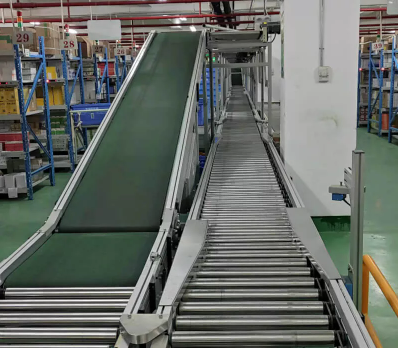
A well-designed incline conveyor system can improve efficiency and minimize operational costs by reducing energy consumption and maintenance requirements.
Managing the speed of the belt and controlling vibrations are essential for smooth material flow. The speed of the conveyor should be adjusted to match the material's handling requirements. Too much speed can cause materials to spill, while too little can slow down the overall operation. Additionally, vibrations can lead to instability or wear on the conveyor components, so controlling vibration is critical to ensure smooth and efficient operation.
Carryback occurs when material sticks to the belt and accumulates along the conveyor, which can lead to operational inefficiencies. Implementing belt cleaners and scrapers at discharge points helps minimize material buildup, keeping the conveyor clean and ensuring continuous transport. Regular cleaning and maintenance of the conveyor components are essential to prevent carryback and keep the system running smoothly.
Energy consumption is a key factor in operational cost, and selecting the right motor and drive system is crucial for reducing energy usage. Efficient energy management in the conveyor system ensures that power is not wasted, and the system operates within its optimal performance range. Overloading the conveyor system or choosing an undersized motor can lead to inefficient operation and increased energy consumption.
Despite their benefits, incline belt conveyors can encounter several operational issues. Identifying these problems early and taking corrective actions can prevent costly downtimes and ensure continuous material handling.
Belt mistracking occurs when the belt runs off-center, causing excessive wear and potentially damaging the conveyor. Regular inspection and realignment of pulleys and rollers are essential for preventing this issue. Ensuring that the conveyor belt is properly aligned with the pulleys and rollers helps avoid damage and ensures smooth operation.
Blockages can occur if the material becomes stuck on the conveyor, disrupting the flow. Identifying and resolving potential bottlenecks quickly helps maintain smooth operation. This may involve adjusting the belt speed or removing debris from the conveyor path to ensure materials move freely without obstruction.
Overheating is often caused by prolonged high-load operation or improper lubrication of the motor and bearings. Ensuring that the motor and bearings are regularly maintained and properly lubricated can prevent overheating and extend the system’s lifespan.
Excessive noise and vibration during operation can indicate underlying problems such as misalignment or worn-out components. Regular checks on the mechanical components can help identify and resolve these issues before they cause system failures.
Problem | Possible Cause | Solution |
Belt Mistracking | Misaligned pulleys, improper tension | Regular realignment, adjust tension |
Carryback | Material buildup on the belt | Install belt cleaners or scrapers |
Overheating Motors | Prolonged high load, poor lubrication | Regular maintenance and lubrication |
Excessive Vibration | Worn-out components, misalignment | Tighten components, inspect regularly |
Incline conveyors are often integrated with other conveyor systems to create an efficient and continuous material handling process.
Incline conveyors can be combined with horizontal conveyors to create a seamless material transport system. This integration ensures that products are moved efficiently between different elevations and across horizontal distances, providing a smooth transition between various sections of the facility.
Incline conveyors can be integrated with automated sorting, storage, and retrieval systems to improve efficiency and reduce manual handling. Integration with warehouse management systems (WMS) ensures that materials are transported seamlessly across various sections of the facility, contributing to a streamlined workflow.
Regular maintenance is key to keeping an incline conveyor system running smoothly and extending its lifespan.
To ensure optimal performance, it is crucial to inspect the conveyor regularly. Weekly checks on the belt and rollers, monthly inspections of motors and structures, and semi-annual general cleaning will help maintain the system’s efficiency. Regular maintenance not only extends the lifespan of the conveyor but also prevents costly downtime due to equipment failure.
Identifying early signs of problems, such as unusual noise, overheating, or belt wear, allows for timely repairs that prevent costly breakdowns. Regular maintenance helps to spot these issues before they cause system failures, ensuring uninterrupted operations.
Designing an efficient incline belt conveyor system requires careful consideration of various factors. These include spatial constraints, material type, and operational needs. By selecting the right components and optimizing for energy efficiency, businesses can ensure that their incline conveyors operate effectively. Addressing common challenges, such as slippage and misalignment, and ensuring regular maintenance are key for long-term success.For businesses looking to optimize their material handling systems, it’s important to evaluate operational needs and space limitations. Consulting with experts in the field can provide valuable insights to design a system that meets specific needs and performs at peak efficiency.
For those interested in optimizing material handling, Zhejiang Rigor Logistics Technology Co., Ltd. offers specialized solutions with advanced incline conveyor systems. Their expertise and tailored products provide high value by maximizing space efficiency and performance.
A: An inclined belt conveyor is a system designed to transport materials between different elevations. It uses a sloped belt to move products efficiently across vertical distances in manufacturing, logistics, and distribution.
A: Inclined Belt Conveyors maximize space by allowing materials to be transported vertically, reducing the need for extra floor space. They enhance operational efficiency and streamline material handling in limited spaces.
A: When selecting an Inclined Belt Conveyor, consider factors like material type, load capacity, and available space. The conveyor’s angle and belt type should align with the product’s characteristics and your facility’s requirements.
A: Common issues with Inclined Belt Conveyors include material slippage, belt mistracking, and overheating motors. Regular maintenance and using appropriate belt types can help address these challenges.
A: Yes, Inclined Belt Conveyors are energy-efficient when designed properly. Choosing the right motor and optimizing the belt speed can significantly reduce energy consumption while maintaining smooth operations.


