Views: 0 Author: Site Editor Publish Time: 2025-06-13 Origin: Site
In any warehouse or distribution center, the reliability of your box conveyor system can directly impact your daily throughput and operational costs. Without consistent maintenance, even the most advanced conveyors can suffer from avoidable issues like misaligned belts, worn rollers, or unplanned stoppages. As facilities scale and workloads increase, a proactive maintenance strategy becomes essential—not only for avoiding breakdowns but also for maximizing long-term performance and equipment lifespan. At Zhejiang Rigor Logistics Technology Co., Ltd., we help businesses keep their box conveyors operating at peak efficiency through smart design and proven maintenance practices.
Routine maintenance checks are the first line of defense against unexpected conveyor system failures. By implementing a simple daily or weekly checklist, you can detect early warning signs and prevent larger issues from developing.
One of the most common causes of premature wear or misalignment is improper belt tension. A belt that’s too loose can slip and cause boxes to shift or jam. A belt that’s too tight adds unnecessary load to the motor and pulleys. Operators should check belt tension and alignment at least once a week to ensure smooth operation and to prevent long-term mechanical damage.
Rollers are critical components in both powered and gravity-style box conveyors. If they become worn or sticky, boxes may drag or stop altogether, especially in accumulation or incline areas. Visual inspections should look for dirt buildup, flat spots, or lagging rollers, and any faulty parts should be cleaned or replaced promptly.
In systems that include accumulation zones, regular checks should be performed to verify that pressure is evenly distributed. Uneven accumulation can cause backup in upstream processes or damage fragile packages. Inspect sensors and pneumatic components, and ensure all zones are responding correctly to control inputs.
A consistent daily or weekly inspection routine not only reduces emergency maintenance but also boosts confidence in your system’s reliability during peak operations.
While daily inspections keep your system in good health, preventive maintenance (PM) schedules are what ensure long-term performance. These deeper tasks should be scheduled monthly, quarterly, or semi-annually depending on system usage.
All mechanical components such as drive chains, idler bearings, and gearbox connections should be lubricated according to the manufacturer’s specifications. Failing to lubricate leads to overheating, excessive wear, and premature failure. We recommend that key lubrication points be revisited at least every three months under standard operating conditions.
Motors and gearboxes are the heart of powered box conveyors. Over time, vibrations and load fluctuations can loosen electrical connections or create misalignments. Inspecting mounting bolts, motor casing temperature, and electrical terminals should be part of every quarterly PM cycle.
Dust, packaging debris, and product spills can build up on belts and guide rollers, causing drag or misalignment. Thorough cleaning and alignment checks every 6 to 8 weeks will prevent tracking issues and extend the belt’s usable life. This is especially important in food, pharma, or packaging environments where hygiene and smooth transport are critical.
At Zhejiang Rigor Logistics Technology Co., Ltd., we provide detailed maintenance guides and optional training packages to ensure your team knows exactly how and when to carry out these tasks.
Even the best systems show signs when something’s not right. Knowing what to look for—and acting quickly—can prevent complete system failures.
Grinding, squeaking, or clicking sounds often indicate mechanical friction or bearing wear. These noises can precede breakdowns and should be investigated immediately.
Boxes that move in a jerky or delayed manner are often suffering from roller lag, belt slippage, or control system issues. In zero-pressure accumulation zones, this might signal a sensor calibration issue.
When boxes begin to tilt, slide, or bypass diverters improperly, the root cause may be incorrect belt speed, worn surface material, or inconsistent drive torque. Left unresolved, this can create bottlenecks and increase damage to products.
Monitoring your box conveyor system for these subtle warning signs can drastically reduce unexpected stoppages. Smart sensors and remote diagnostics—available as part of our control systems—can help detect many of these issues before they disrupt operations.
Proper box conveyor maintenance is not just about avoiding breakdowns—it’s a direct way to reduce operational expenses and increase return on investment.
Scheduled maintenance means less time spent on emergency repairs and system resets. Unplanned downtime can cost hundreds or even thousands in lost productivity per hour. Preventive practices reduce this dramatically by keeping components in optimal condition.
Reactively replacing damaged motors, belts, or sensors is far more costly than maintaining them regularly. Preventive maintenance extends the life of parts, reducing the frequency and urgency of replacements. When replacements are needed, early detection gives you time to source parts economically.
When conveyor systems are reliable, workers don’t need to spend time troubleshooting or manually moving boxes. This frees up manpower for more valuable tasks like quality control or order fulfillment. A consistently operating box conveyor system helps reduce labor hours per unit shipped.
At Zhejiang Rigor Logistics Technology Co., Ltd., our box conveyor designs are built for easy maintenance access and minimal downtime, making them ideal for high-efficiency operations.
Even with strong maintenance routines, all systems eventually reach a point where performance gains can only come through modernization or redesign.
If your system experiences frequent breakdowns—even after preventive maintenance—it may indicate that the hardware is no longer suited to your operational demands. Motors may be undersized, roller systems may lack necessary buffering, or software may be outdated.
As your business scales, throughput may exceed what your current conveyor can handle. Long lines of idle boxes or slow accumulation zones can result in missed shipping deadlines and customer dissatisfaction.
If you’re adding new workstations, integrating AMRs, or expanding to new warehouse zones, it’s often more cost-effective to do a full conveyor system audit. This includes checking load capacities, drive power, PLC capacity, and layout flexibility.
Zhejiang Rigor Logistics Technology Co., Ltd. offers full system modernization consulting. We help clients identify outdated components, introduce automation upgrades, and redesign their box conveyor infrastructure for the next stage of growth.
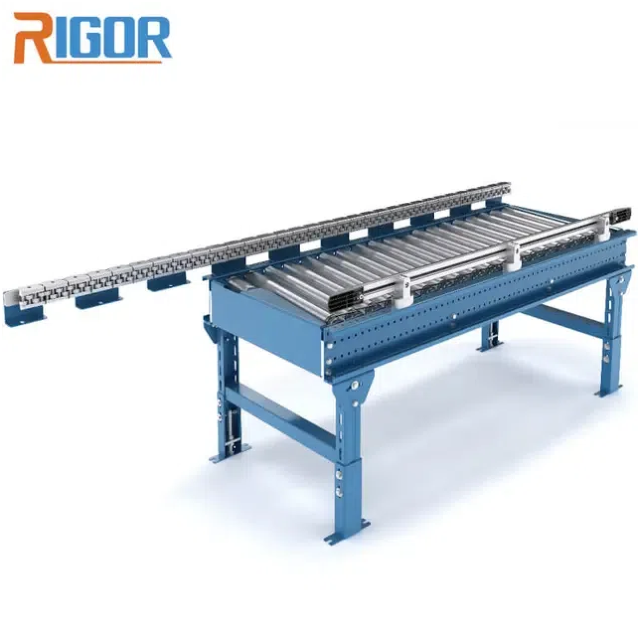
Effective box conveyor maintenance is essential to sustaining high productivity, reducing operational costs, and extending equipment life. A proactive strategy—daily inspections, scheduled preventive care, and readiness to modernize—keeps your logistics system running smoothly and efficiently.
Zhejiang Rigor Logistics Technology Co., Ltd. is committed to providing not just high-performance box conveyors but also long-term value through smart design and support.
Contact us today to learn more about our customized conveyor systems, maintenance planning, and modernization services tailored to your business needs.


